Anointing of the Sick
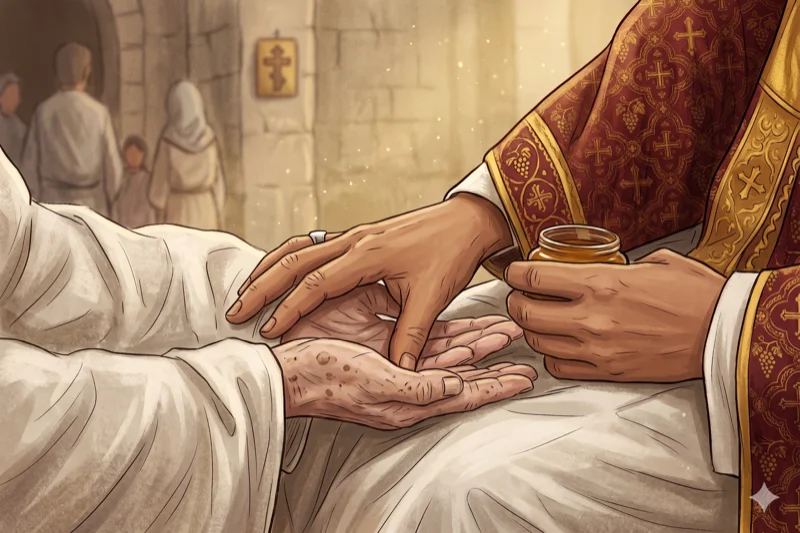
The priest anoints the sick with blessed oil — the touch of the Divine Physician.
Healing for Body and Spirit
The sacrament of Anointing is not merely a prayer for the dying, nor is it a magic cure for the body. Rather, it is an encounter with Christ the Healer, a visible and tangible sign that God cares for the whole person. Orthodox theology holds that the human being is a unified whole: body and soul cannot be separated. When the body suffers, the spirit suffers. When the spirit is burdened by sin, the body becomes subject to illness.
This sacrament brings both physical healing and spiritual restoration. Through the prayers of the Church and the anointing with blessed oil, the sick person receives the forgiveness of sins, comfort in suffering, and the strength to endure. The sacrament does not promise automatic cure, but it promises something far greater: the presence of God in the midst of pain, and the assurance that sickness and death are not final.
As the Church teaches, even when physical healing does not come, spiritual healing always takes place: the restoration of peace, the forgiveness of sins, the reconciliation with God and others, and the grace to unite one's suffering with Christ's redemptive suffering on the Cross.
The Seven Steps
The Request for the Priest
When someone is ill, whether seriously or mildly, they or their family may request the priest to come and perform the anointing. This is not limited to cases of imminent death. In fact, the Church encourages the faithful to seek anointing whenever they are sick, for the sacrament brings healing and grace regardless of the severity of illness.
Preparation of the Space
The sick person's room or the place of anointing is thoroughly cleansed to honor the sacred nature of the sacrament. Two candles are lit before the anointing begins. The space becomes a sanctuary, a place where heaven and earth meet, where the Divine Physician comes to visit His suffering child.
The Priest's Preparation and Approach
The priest vests in his liturgical stole (epitrachelion) and prepares himself spiritually. If the sick person is unable to come to church, the priest brings Holy Communion and the blessed oil directly to them. As he travels through the streets or approaches the sickroom, he recites sacred Psalms: Psalm 51 (mercy and repentance), Psalm 63 (thirst for God), Psalm 19 (God's glory), and Psalm 148 (praise of the Lord). These prayers prepare both priest and people for the holy encounter.
Confession and Reconciliation
Before the anointing takes place, the sick person has the opportunity to confess their sins to the priest. This confession may be brief. The priest meets the penitent where they are, understanding that illness may make lengthy confession difficult. The priest then pronounces absolution, restoring the person to right relationship with God and the Church. As the tradition teaches, without genuine repentance, the sacrament lacks its full meaning, but the Church's mercy is always present for those who desire it.
The Anointing with Blessed Oil
The priest anoints the sick person with holy oil, traditionally on the forehead, hands, chest, and other parts of the body, depending on the nature of the illness. The oil, blessed in the name of the Holy Trinity, becomes a visible sign of God's grace flowing into the body. Each touch of the oil carries a prayer: for healing, for forgiveness, for peace. The anointing is performed with the priest's right hand, invoking the Father, the Son, and the Holy Spirit.
Prayers for Healing and the Laying On of Hands
The priest prays for both physical and spiritual healing, calling upon Christ the Healer to manifest His compassion. The priest's hands are laid upon the sick person in blessing, following the ancient practice of Christ Himself, who healed by His touch. These prayers acknowledge human suffering while affirming faith in God's power to restore, comfort, and transform.
Holy Communion
If the sick person is able to receive it, the priest administers Holy Communion, the Body and Blood of Christ. The Eucharist, received in the time of sickness, becomes medicine for the soul and spirit. This communion unites the suffering believer with Christ's redemptive suffering and resurrects hope in eternal life.
Preparing for the Anointing
- During any illness, not just critical ones
- For chronic or recurring conditions
- When facing surgery or medical procedures
- For recovery from accident or injury
- For emotional or psychological suffering
- Upon medical diagnosis or uncertain prognosis
- Speak with your parish priest as soon as possible
- If able, prepare by examining your conscience
- Confess any sins troubling your heart
- Prepare a clean, quiet space for the priest
- Light candles if possible before his arrival
- Receive Holy Communion if able
- Contact the parish priest on behalf of your loved one
- Prepare the room: cleanse it, light candles
- Provide ordinary water for the priest to wash his hands
- Create a respectful, quiet atmosphere
- Pray with and for the sick person
- Be present, but allow privacy for confession if needed
What Anointing Is NOT
Anointing of the sick is not a last rite performed only when death is near. It is not a magical cure that guarantees physical healing. It is not a replacement for medical care; believers seek both the doctor's skill and God's blessing. Rather, it is a sacrament of present grace, available at any time of sickness to bring comfort, forgiveness, and spiritual healing.
Deeper Understanding
- Why does anointing heal? Not because oil has medical properties, but because the sacrament connects the believer directly to Christ the Divine Physician. The healing may be physical or spiritual, the soul healed of fear, despair, guilt, and separation from God.
- Orthodox theology recognizes that sickness is a result of the Fall. When we are ill, we encounter our mortality, our limitation, our need for God. The anointing meets us in this vulnerability and reminds us that God has not abandoned us.
- The greatest healing is reconciliation with God. Even if physical healing does not come, the person receives the peace Christ promised: "Peace I leave with you; my peace I give to you."
- Christ the Healer was known throughout the Gospels for His compassion toward the sick. He touched the leper, healed the paralytic, raised the widow's son from death, always with tenderness and personal concern.
- The Apostles continued this ministry. St. James commanded the Church to anoint the sick. St. Peter healed the lame beggar. The early Church understood that Christ's healing ministry continues through the Church.
- In the Malankara Orthodox tradition, the sacrament connects us to centuries of faithful prayers, from the ancient Church in Jerusalem to the Apostle Thomas's mission in India. When you are anointed, you stand in communion with all the saints.
Seek the Healer's Touch
If you or someone you love is suffering from illness, do not hesitate to contact your parish priest. There is no condition too small, no pain too insignificant for God's attention.
Contact the Parish